
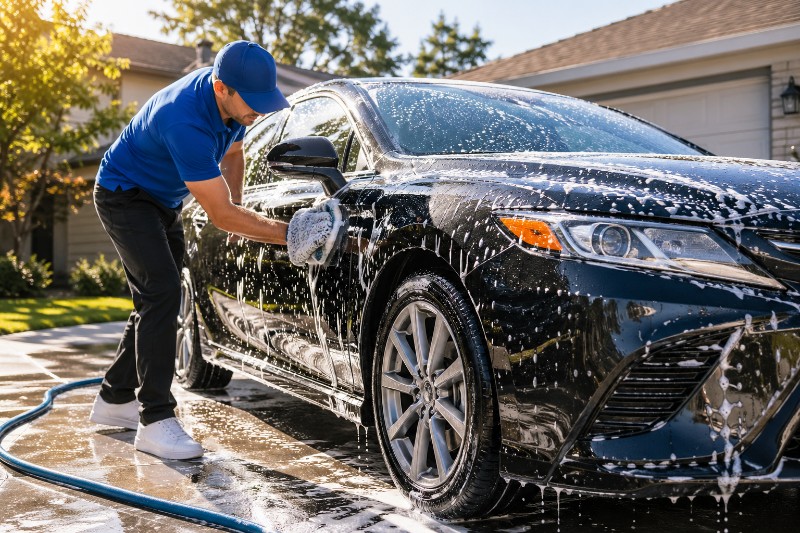
Water spots are one of the most frustrating paint imperfections for car owners. These white, crusty deposits appear after washing your car or rain, leaving unsightly marks on your otherwise clean vehicle. While they might seem harmless, water spots can actually etch into your clear coat if left untreated, causing permanent damage.
In this comprehensive guide, we’ll explain what causes water spots, how to remove them safely, and most importantly, how to prevent them from returning.
Understanding Water Spots
Water spots form when water evaporates from your car’s surface, leaving behind dissolved minerals—primarily calcium, magnesium, and other trace elements. The severity depends on your water’s mineral content (hard vs. soft water) and how long the water sits before evaporating.
Types of Water Spots
Type 1 - Surface Water Spots: These are fresh spots where minerals sit on top of the clear coat. They’re the easiest to remove and haven’t bonded with the paint yet.
Type 2 - Bonded Water Spots: When minerals bond with the clear coat through heat or prolonged exposure, they become more difficult to remove. These require chemical treatment or light polishing.
Type 3 - Etched Water Spots: The most severe type, where minerals have actually eaten into the clear coat, creating crater-like depressions. These require paint correction to fix.
Quick Removal Methods for Fresh Water Spots
Method 1: Distilled Water Rinse
The simplest approach for fresh water spots:
- Spray distilled water over the affected area
- Let it sit for 2-3 minutes to dissolve minerals
- Wipe gently with a clean microfiber towel
- Dry immediately to prevent new spots
This works because distilled water contains no minerals and helps dissolve the mineral deposits.
Method 2: White Vinegar Solution
For slightly more stubborn spots:
- Mix equal parts white vinegar and distilled water in a spray bottle
- Spray the solution on water spots
- Wait 1-2 minutes (don’t let it dry)
- Wipe clean with microfiber
- Rinse thoroughly with distilled water
- Dry completely
Warning: Never let vinegar dry on your paint. Always rinse thoroughly and work in the shade.
Advanced Removal for Bonded Spots
Method 3: Dedicated Water Spot Remover
For bonded mineral deposits:
- Wash and dry the vehicle completely
- Apply water spot remover to a microfiber applicator
- Work in small sections using light pressure
- Buff with clean microfiber after the product hazes
- Follow with wax or sealant for protection
Professional water spot removers use mild acids to dissolve bonded minerals safely.
Method 4: Clay Bar Treatment
When chemical removers aren’t enough:
- Spray clay lubricant on the spotted area
- Glide clay bar over the surface with light pressure
- Fold and knead the clay frequently
- Wipe clean with microfiber
- Apply paint protection
Clay physically removes bonded contaminants, including stubborn water spots.
Professional Solutions for Etched Spots
Etched water spots have damaged the clear coat and require more aggressive treatment:
Paint Correction
- Machine polishing with cutting compound
- Follow with finishing polish for clarity
- Apply ceramic coating or sealant for protection
This physically removes damaged clear coat to reveal fresh surface underneath. Best performed by professionals.
Chemical Etching Removal
- Apply specialized etching remover (stronger acid-based products)
- Allow proper dwell time (follow product instructions)
- Remove thoroughly
- Polish to restore gloss
- Protect with durable coating
Prevention: The Best Solution
Preventing water spots is far easier than removing them:
During Washing
- Use filtered or distilled water for final rinse
- Wash in shade or cool temperatures
- Dry immediately after washing—don’t let air dry
- Use a drying aid or detail spray while drying
Daily Protection
- Park in garage or covered area when possible
- Use a quality wax or sealant to create a barrier
- Apply ceramic coating for maximum protection
- Quick detail after rain to remove water before it dries
Hard Water Solutions
If you have hard water:
- Install a water softener or filter for your hose
- Use a deionization filter for spot-free rinsing
- Keep distilled water handy for final rinse
- Consider professional detailing for perfect results
Common Mistakes to Avoid
Don’t:
- Let water air dry on your car
- Use household cleaners (dish soap, glass cleaner)
- Scrub aggressively with abrasive materials
- Let vinegar or acidic cleaners dry on paint
- Ignore early-stage water spots
Do:
- Act quickly when spots appear
- Use proper products and techniques
- Work in shade or garage
- Always follow up with protection
- Test products in inconspicuous areas first
Product Recommendations
For Prevention:
- Quality car wash soap (pH-neutral)
- Drying aid or detail spray
- Microfiber drying towels
- Water filter for hose
For Removal:
- Distilled white vinegar
- Commercial water spot remover
- Clay bar kit
- Machine polisher (for severe cases)
When to Seek Professional Help
Consider professional detailing if:
- Water spots cover large areas
- Spots are severely etched
- DIY methods haven’t worked
- You’re not comfortable polishing
- Your car has dark or delicate paint
Professionals have industrial-strength products and the experience to safely remove stubborn spots without damaging your paint.
Final Thoughts
Water spots are preventable with proper washing and drying techniques. When they do appear, act quickly—fresh spots are exponentially easier to remove than bonded or etched ones.
The key is regular maintenance and immediate action. Don’t let water sit on your paint, always dry your car thoroughly after washing, and apply quality protection to create a barrier against mineral deposits.
Need help with stubborn water spots? Contact AutoMob for professional water spot removal and paint protection services. We’ll restore your paint to perfect condition and apply durable protection to prevent future spots.